RCS vs. SMS: Which is Better for Business Communications?
Two dominant formats that rule this particular niche are SMS and RCS. Although both these formats are effective, they still have a very diverse approach when it comes to their utilization. Let’s Get Started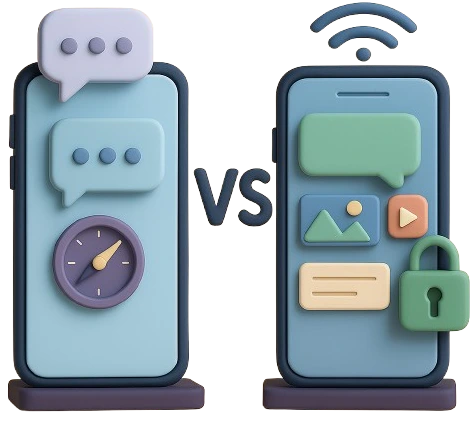
Business communication is evolving faster than it has ever. With all the advancements, the future of mobile messaging has become dynamic. Being able to capture customers' attention and keep them engaged through portable devices is one of the primary strategies. Most communication experts rely on such factors to predict and create a more secure future for business communication.
Two dominant formats that rule this particular niche are SMS and RCS. Although both these formats are effective, they still have a very diverse approach when it comes to their utilization. If you often wonder which would be better for your business, here is an RCS vs. SMS comparison. Learning the basics will allow you to implement either channel effectively.


Understanding SMS and RCS
To draw an RCS vs. SMS comparison, one first has to understand what they stand for exactly. While SMS means Short Message Service, RCS refers to Rich Communication Services. SMS, if explained in simple words, is a text messaging protocol. It allows users to send and receive short text messages. The number of characters is limited in this messaging format.
With messaging technology evolution, SMS has now been upgraded to RCS, an advanced messaging protocol. RCS enhances traditional SMS by incorporating the option of rich media content. It means with the help of RCS, a user can send and receive images, videos, carousels, and much more. RCS provides a more interactive app-like experience directly within the default messaging app.
Effects of SMS vs RCS on Business Communication
Since SMS and RCS are very different protocols the effects they have on business communication also vary. A proper RCS versus SMS comparison can only be made when each of the effects is carefully analyzed. This would help any company understand the business communication outcomes they can achieve from implementing SMS or RCS.
Text Richness & Engagement
The richness of the text plays a significant role when it comes to keeping viewers engaged. There is a major and critical difference between this factor when you indulge in RCS vs. SMS comparison.
- SMS : As we know, the number of characters in SMS is limited to 160, and it supports plain text. This type of messaging facility is ideal for sending simple notifications and reminders like OTPs.
- RCS : On the other hand, RCS supports rich media, which is inclusive of every possible visual aid. RCS can help transform the messaging experience into an app-like feel, making it more engaging.
- Effects on Business Communication
For companies using WhatsApp business API, tracking the number of users opting to receive messages can help them gauge interest and compliance with regulations. Personalized WhatsApp messaging can allow you to improve your opt-in rate.
Reach & Delivery
When a business is selecting a communication channel, its reach and compatibility are crucial. Since it usually impacts the delivery success rate of the sent message.
- SMS : It can work on virtually every mobile phone, regardless of its model, operating system, or carrier. Also, SMS does not require an internet connection and is available globally.
- RCS : Is only available on Android smart devices, which support RCS-enabled messaging apps. It requires data or a Wi-Fi connection. Additionally, not all global carriers support RCS as of now.
- Effects on Business Communication
RCS vs. SMS comparison of effects on business communication showcases that SMS offers universal coverage. This makes it ideal for wide-reaching communication. Especially in regions with older devices or poor internet connectivity. Even though RCS provides a richer experience, it still has a limited reach.
Cost & Return on Investment
A business also has to conduct a cost RCS vs. SMS comparison before making a decision. Expanding your operational budget significantly is never a good idea. So, choosing one that suits your budget and needs is ideal.
- SMS : It is typically more affordable per message, particularly for high-volume transactional messaging.
- RCS : The service can be more expensive since it involves the use of data and rich content. But mobile carriers offer flexible pricing models. The charges are based on interaction and not message count.
- Effects on Business Communication
The cost comparison of RCS and SMS suggests that for bulk messaging with simple content, SMS is an ideal choice. But RCS justifies higher costs by providing higher ROI, especially when marketing campaigns are involved.
Use Case Versatility
Different types of businesses have different communication needs. From marketing and promotion to customer service, it all matters while choosing between the two. Cross-platform compatibility is also a significant factor.
- SMS : This can be used for sending promotional offers like text-based coupons. It offers one-way customer support. Is also ideal for sending appointment reminders and order tracking details.
- RCS : RCS can also be utilized for the same but in a richer format. This can include interactive cards, images, buttons, countdown timers, visual reminders, and even two-way chat support.
- Effects on Business Communication
SMS is effective for straightforward messages and urgent alerts. When you draw an RCS vs. SMS comparison, you learn that RCS enhances customer engagement by making messages interactive. It plays on the value of customer satisfaction and reduces communication friction.

Branding & Personalizing
Creating brand visibility and establishing trust is essential in mobile communication. So, it is only fair to indulge in RCS vs. SMS comparison on this factor as well.
- SMS : It does not support branding. A sender's ID may appear as a random short-code or generic number. This usually looks impersonal and sometimes like spam.
- RCS : It enables verified business profiles to interact with customers. Here messages are sent from a branded profile, which can include the company's name, logo, and colour scheme.
- Effects on Business Communication
RCS brand messaging feature allows businesses to establish trust, boost brand recall, and deliver personalized experience. Verified branding also reduces phishing and fraud risk. Such benefits can not be acquired with the traditional SMS protocol.
Some of the other factors that RCS vs. SMS comparison can be made on include security and compliance. The list can also be surrounded by analytics and tracking features of both messaging protocols. In the modern business communication world, both SMS and RCS have a strong place. While SMS remains indispensable, RCS adds a ton of engaging features.
Even though SMS text-only limitations may hold back sometimes, it is still considered widely by businesses for its reliability and universal reach. RCS, however, is known for its interactive and personalized experience through means like rich cards and carousels. Overall, it is ideal for a brand to opt for multi-channel business communication strategies.